Artificial intelligence (AI) tools are increasingly being abused by some customers to alter images of food in order to claim refunds or free meals — a trend that is catching the attention of restaurants and delivery platforms alike.
According to The Times of London, popular food delivery services such as Uber Eats, Deliveroo and Just Eat have reported a surge in fraudulent claims involving AI-edited photos. Scammers take pictures of meals they received and use AI to modify the images so that the food appears undercooked, contaminated, or otherwise unsatisfactory - even adding unrealistic defects — with the goal of triggering automatic refunds or compensation.
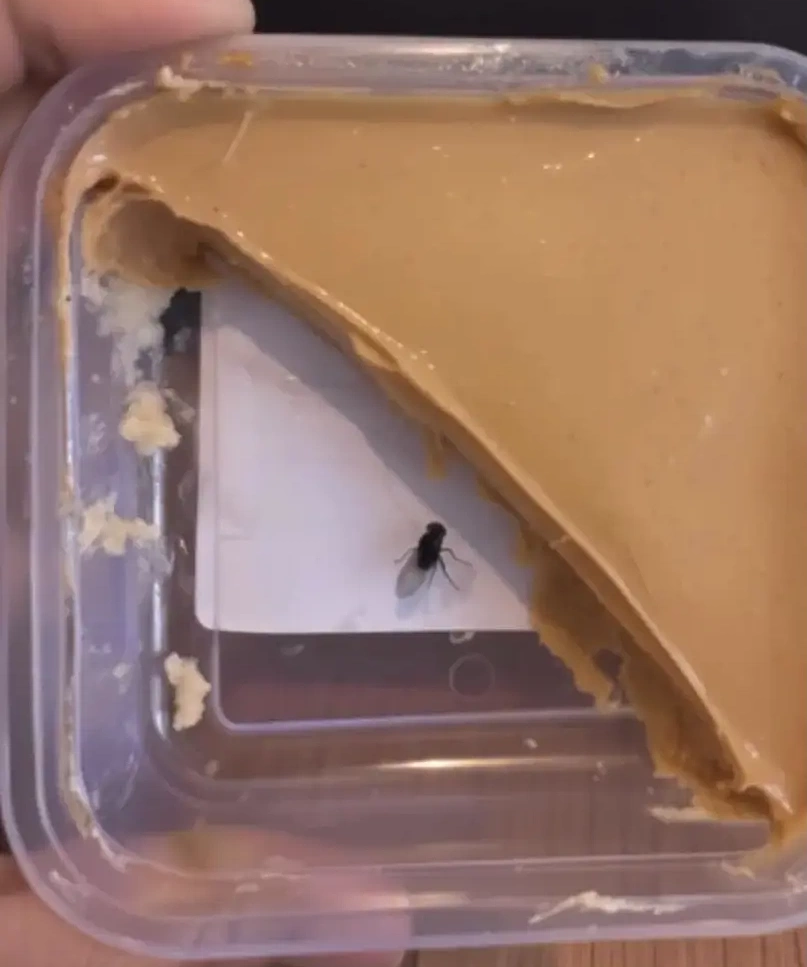
(A photo of a pastry in which AI has “added” a fly in the middle. Photo: Facebook / Nini’s Kitchen)
Recent examples shared on social media show users openly admitting to manipulating food images for refunds. One person on platform X said they “edited the photo to get money back from DoorDash,” sharing an AI-altered image of a hamburger made to look raw that went viral with over a million views. In another post on Threads, a user explained how they edited a chicken leg to appear uncooked, then submitted the image and received a $26.60 refund after the service apologized for the inconvenience.
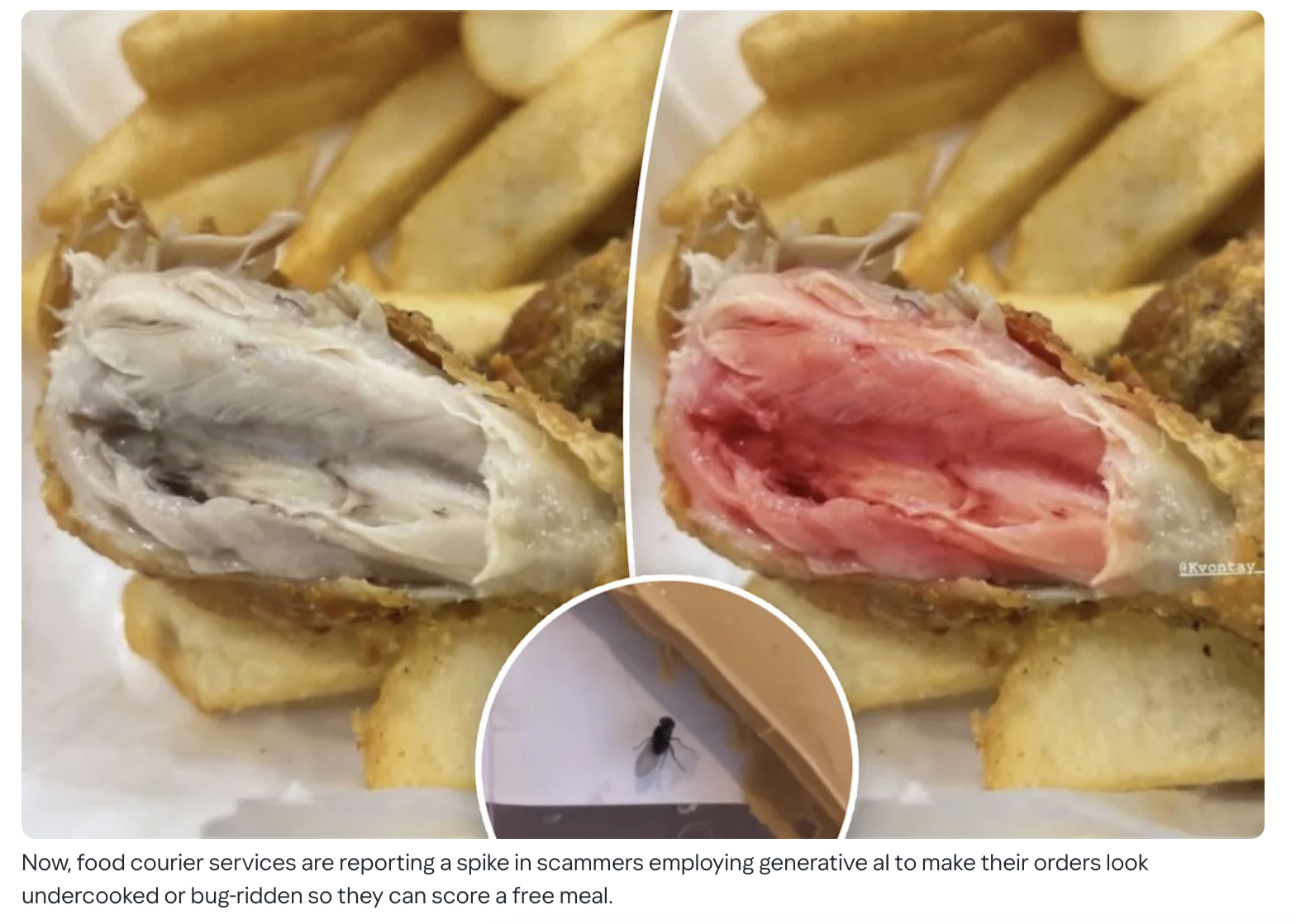
The online reactions to these revelations were swift and harsh — many criticized the practice as unethical and potentially criminal, with comments like “this isn’t funny at all” and hopes that offenders face legal consequences. Critics also noted that such actions ultimately harm the restaurants and small business owners, not just the food delivery platforms.

Experts warn that these AI-generated refund schemes reflect a modern twist on long-standing retail fraud, now powered by image-generation technology that can produce convincing “evidence.” As AI models become more advanced and difficult to distinguish from real photos or videos, restaurants and delivery services are facing financial losses and challenges in proving the authenticity of complaints.
Some businesses are considering requiring customers to submit video proof of the product rather than just still images - but this approach carries its own costs and risks, potentially alienating genuine customers in the process.
![[Latest News] FLI Alumni & Partners Monthly Engagement Series](https://vcystvqnqlquncjkhfqk.supabase.co/storage/v1/render/image/public/cm86yzxje006dqu90iz4rc2vg/cm99jkhp20069j9vubvs02vza/885128_image.jpeg?width=600&quality=80&resize=contain)
![[Expert View] THE WORKFORCE CHALLENGE IN THE DIGITAL AGE: AS TECHNOLOGY SHAPES THE FUTURE, MORE WOMEN NEED TO BE PART OF BUILDING IT](https://vcystvqnqlquncjkhfqk.supabase.co/storage/v1/render/image/public/cm86yzxje006dqu90iz4rc2vg/cm99jkhp20069j9vubvs02vza/680085_image.jpeg?width=600&quality=80&resize=contain)
![[Expert View] At which career stage are Vietnamese women “disappearing” in the tech sector?](https://vcystvqnqlquncjkhfqk.supabase.co/storage/v1/render/image/public/cm86yzxje006dqu90iz4rc2vg/Users/607147_image.jpeg?width=600&quality=80&resize=contain)
![[Latest News] HCMC offers $8 daily allowance for workers in national database campaigns](https://vcystvqnqlquncjkhfqk.supabase.co/storage/v1/render/image/public/cm86yzxje006dqu90iz4rc2vg/Users/591768_image.jpeg?width=600&quality=80&resize=contain)
![[Latest News] Vietnam leads Southeast Asia in using Google AI for education](https://vcystvqnqlquncjkhfqk.supabase.co/storage/v1/render/image/public/cm86yzxje006dqu90iz4rc2vg/Users/28731_image.jpeg?width=600&quality=80&resize=contain)
![[Event] Vietnam Women Tech Award 2026 - Award Categories](https://vcystvqnqlquncjkhfqk.supabase.co/storage/v1/render/image/public/cm86yzxje006dqu90iz4rc2vg/Users/37294_image.jpeg?width=600&quality=80&resize=contain)
![[Event] Meet-up Recap | Human + AI Agents Collaboration: How Organizations Can Build AI-Ready Teams and Operations](https://vcystvqnqlquncjkhfqk.supabase.co/storage/v1/render/image/public/cm86yzxje006dqu90iz4rc2vg/Users/963421_image.jpeg?width=600&quality=80&resize=contain)
![[Latest News] Vietnam has highest rate of elite AI professionals in Southeast Asia](https://vcystvqnqlquncjkhfqk.supabase.co/storage/v1/render/image/public/cm86yzxje006dqu90iz4rc2vg/Users/927752_image.jpeg?width=600&quality=80&resize=contain)
![[Event] VIETNAM WOMEN TECH AWARD 2026 - AWARD CATEGORIES](https://vcystvqnqlquncjkhfqk.supabase.co/storage/v1/render/image/public/cm86yzxje006dqu90iz4rc2vg/Users/795901_image.jpeg?width=600&quality=80&resize=contain)
![[Event] Official Launch of Vietnam Women Tech Award 2026](https://vcystvqnqlquncjkhfqk.supabase.co/storage/v1/render/image/public/cm86yzxje006dqu90iz4rc2vg/Users/153052_image.jpeg?width=600&quality=80&resize=contain)